Data · glossary
What Do Roofing Terms Mean on an Older House?
Twenty-two terms that come up on estimates and permit forms for prewar roofs, in plain words. Download the list as CSV.
- 22 terms
- Linked to sources where it matters
- CSV download
What is board decking, and why does it matter for a new roof?
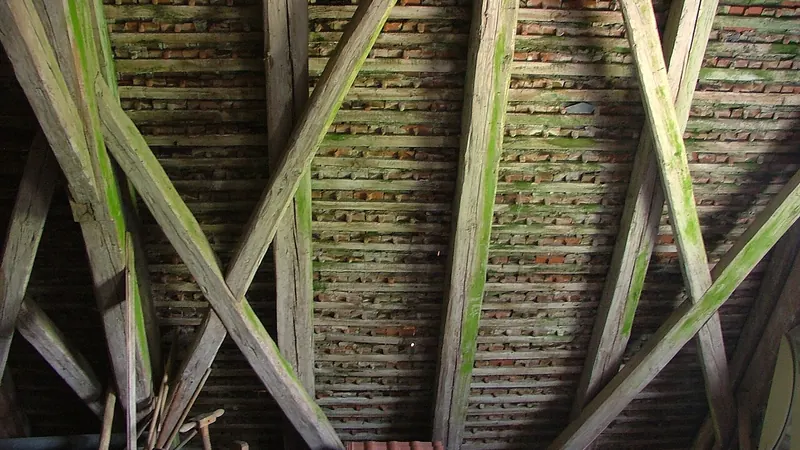
Board decking is the solid plank sheathing nailed across the rafters of most prewar houses. It matters because asphalt shingles need a continuous, sound deck, so broken, rotted or gapped boards have to be replaced or covered before the new roof goes on. That deck work is the biggest unknown on older houses.
Glossary
| Term | Meaning |
|---|---|
| Architectural shingle | A laminated asphalt shingle with two or more layers, giving a thicker, shadowed look than a flat 3-tab shingle. The usual choice when replacing slate. |
| 3-tab shingle | A single-layer asphalt shingle cut into three tabs. Flatter and lighter than an architectural shingle. |
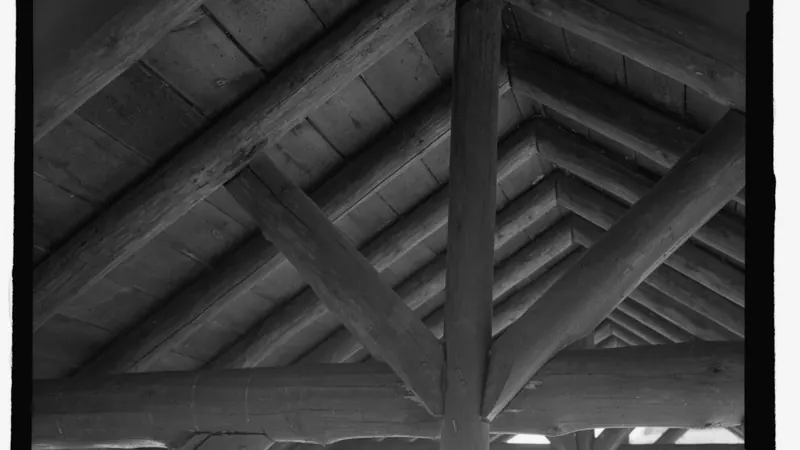
| Board decking (plank sheathing) | Solid wood boards nailed across the rafters, common under prewar roofs. Asphalt needs a continuous, sound deck. |
| Skip sheathing | Boards nailed with gaps between them, sometimes found under old wood-shingle roofs. It has to be closed in before asphalt goes on. |
| Tear-off | Removing all existing roofing down to the deck. Philadelphia's EZ Re-Roofing standard requires it when the old roof is slate. |
| Layover (roof-over) | Putting new shingles over an existing layer. Not possible over slate. |
| Square | Roofers' unit of area: 100 square feet of roof surface. |
| Pitch (slope) | Rise over a 12-inch run, written like 4:12. The NPS gives 4:12 as the usual minimum for slate; asphalt can go lower with the right underlayment. |
| Underlayment | The sheet layer between the deck and the shingles; it sheds water that gets past them. |
| Ice barrier | Self-sticking underlayment along eaves and in valleys that seals around nails, against ice-dam leaks. |
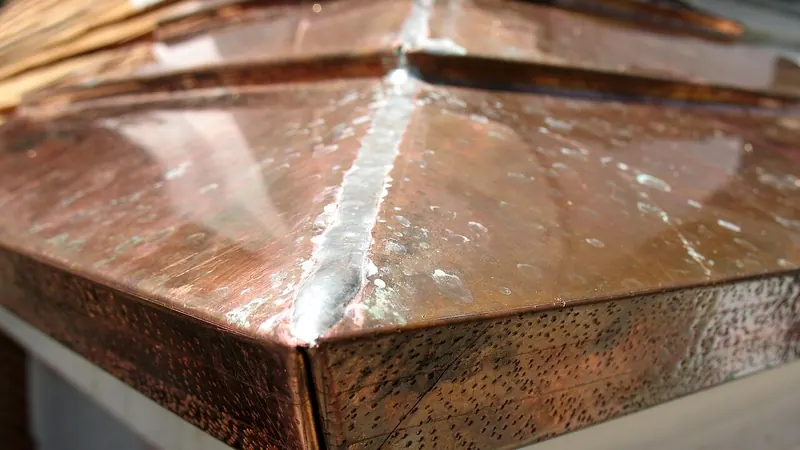
| Drip edge | Metal edging along eaves and rakes that carries water off the roof edge and into the gutter. |
| Flashing | Metal that seals the joints where a roof meets a chimney, wall, dormer or valley. |
| Step flashing | Short L-shaped flashing pieces woven in with each shingle course along a sidewall. |
| Counterflashing | Flashing set into a chimney's mortar joints that laps over the step flashing below. |
| Valley | The inside angle where two roof slopes meet, carrying the most water on the roof. |
| Built-in gutter (box gutter) | A gutter formed into the roof edge or cornice, often lined with metal. Common on prewar houses. |
| Hard-vein and soft-vein slate | Trade terms for Pennsylvania slates of different durability; the NPS gives soft-vein over 60 years and hard-vein about 100. |
| Delamination | Slate splitting into thin layers as it weathers, a sign the stone itself is failing. |
| Nail sickness | Slates slipping because the nails holding them have rusted through. |
| Mansard | A roof with a steep lower slope, often slate-covered. Philadelphia excludes mansards from staff approval for slate substitutes. |
| Certificate of Appropriateness | The approval a historic review body issues before a permit for work on a designated house or one in a district. |
| False leak | Water stains caused by attic condensation rather than a roof leak; the NPS describes them on slate roofs. |
Download: roof-glossary.csv. Definitions are ours; rules quoted are linked below.
Sources and checked date
- Philadelphia L&I, EZ Re-Roofing Permit Standard PB_012_F tear-off rule
- Philadelphia Historical Commission Rules & Regulations, §6.10.c(4) mansards
- National Park Service, Preservation Brief 29 slate lifespans, slope, false leaks
Last checked 2026-10-29.
Rules change. Confirm with the city, township or borough permit office before you rely on any permit or historic-district detail here.
Got an estimate you can't decode?
Tell us where the house is, how old the roof is and what it is doing. If you have photos, say so and we will ask for them by email. Outside our core area? Send the form and ask.
We answer form requests Monday to Friday, 9am to 5pm. There is no phone line, so the whole conversation stays in writing.